All About African Art with Curator Atim Oton
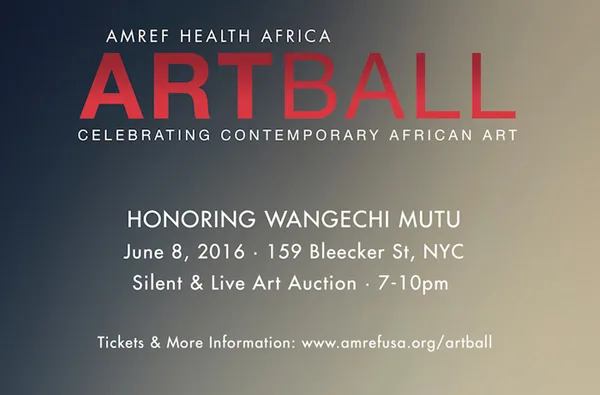
Curator, entrepreneur, designer and editor Atim Annette Oton curated Amref Health Africa’s inaugural ARTBALL — a landmark event bringing together Contemporary African Art from across 11 countries, with a collection available on Paddle8. The event honored artist Wangechi Mutu with the Rees Humanitarian Award.
– This is the inaugural Amref ArtBall celebrating Contemporary African Art. With so many other art nonprofit events, what sets this apart?
The ArtBall stands on its own because, from what I understand, it is the first to focus solely on Contemporary African Art. We brought together art from across the continent — 11 countries: Burkina Faso, Cameroon, Congo, Egypt, Ghana, Ivory Coast, Kenya, Nigeria, Senegal, South Africa, and Tanzania. It is also unique in that the organization itself is African. Amref Health Africa was founded nearly 60 years ago, with headquarters in Nairobi and a staff of which 97% is African. They truly represent “African solutions with African expertise” — making for a perfect partnership between the artists and the nonprofit.
– Wangechi Mutu is being honored with the Rees Humanitarian Award. How did that come about?
Mutu is being honored not only for her work with AFRICA’SOUT, but for her work as a contemporary activist artist as a whole. Over the past 15 to 20 years, her artwork has helped elevate the contemporary “African artist” to a level that says they are just as important as “American/European artists.” As the largest African-based NGO, training health workers and building human resources across the continent, Amref wants to celebrate the “power of Africa” and maintain a distinctly African brand. Mutu embodies that.
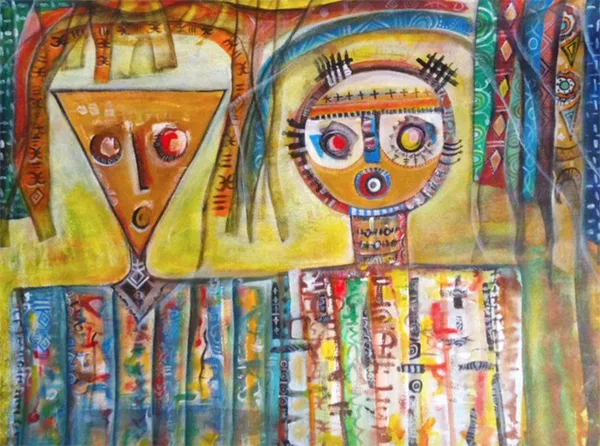
Claude Gomis
– How did you get your start as a curator of African Art?
It took a while to get here. Born in Nigeria with an American mother who collected African art, the exposure started early — including trips to the US to sell art. After completing a first curatorial project on women architects in architecture school in New York, then graduate school in London, Oton returned to New York to work professionally in architecture. By 2000, she left the field — finding it limiting — to become the Associate Chair of Product Design at Parsons School of Design. There she began curating and working on installations at venues including Parsons Galleries, ICFF in New York, Salone del Mobile in Milan, and Biennale Internationale Design Saint-Étienne in France. In 2004, she founded Calabar Imports, focused on solo exhibitions of emerging Black artists in Brooklyn. Most recently, she joined the curatorial team for Bronx:Africa at Longwood Gallery, opened Calabar Gallery in Harlem, and was recommended to Amref’s event producer for her deep knowledge of the scope and breadth of African art.
– How many artists made works specifically for the Amref ArtBall?
Three artists created work tied directly to healthcare and Amref: Paa Joe’s sculptural piece honors healthcare workers; Mederic Turay focused on equal health for women and children; and Michael Soi produced a painting on visiting a doctor to highlight the importance of regular checkups.
Esther Malangu
– What are the artists and their works?
With 31 artists spanning the beginning, middle, and end of their careers, the 33 curated pieces cover nearly 100 years of Contemporary African Art — illustrating the variety of styles, social and political engagement, and the countries they represent. The collection includes select emerging, established, and master artists: George Lilanga, Imo Nse Imeh, Ibou Ndoye, Anne Ntinyari Mwiti, Frederic Bruly Bouabre, Soly Cisse, Mederic Turay, Burns Effiom, Doba Afolabi, Tahir Carl Karmali, Wanja Kimani, Paa Joe, Michael Soi, Ify Chiejina, Wiz Kudowor, Nowinde Vivien Sawadogo, TAFA, Armand Boua, Eto Otitigbe, Claude Gomis, Saidou Dicko, Esther Mahlangu, Tessa Teixeira, Erikan Ekefrey, Ibrahim Ahmed, Tabitha WA Thuku, Kgalalelo Gaitate, Richard Ketley, Alioum Moussa, Chriss Aghana Nwobu, and Sapin Makengele.
Tahir Carl Kamili
– What is the difference between a Contemporary African Artist and an African American Artist?
A Contemporary African Artist is an artist from, and of, the continent. Armand Boua was born in Ivory Coast; Ify Chiejina is an emerging artist born in the US with parents from Nigeria who considers herself an African artist born overseas. Contemporary African Artists utilize a dynamic combination of materials, methods, concepts, and subjects that challenge traditional boundaries. Birth, language, experience, culture, and the interplay of connection to and against the continent form the narrative of an African artist. The narrative of the African American artist is different — their culture carries traces of Africa, but it is centered on America: from history to everyday life.
Ibou Ndoye
– What are your ArtBall picks for someone looking to start collecting Contemporary African Art?
For a new collector with a budget under $5,000: Ibou Ndoye’s AfroPunk, Nomwinde Sawadago’s Tante 1, Tahir’s photograph from his Jua series, Michael Soi’s The Doctor’s Visit, Tessa Teixera’s Freedom for Self 2, Alioum Moussa’s Apollo 13, and work from Ify Chiejina’s Bu obere nwa / Was a Little Girl and Ibrahim Ahmed.
For emerging artists: Mederic Turay, Soly Cisse, Saidou Dicko, Wanja Kimani, Sapin Makengele, Armand Boua, Erikan Ekefrey, Tahir Carl Kimani, Imo Nse Imeh, Kgalalelo Gaitate, Ify Chiejina, Ibrahim Ahmed, Michael Soi, and Nomwinde Sawadago.
For established artists: Doba Afolabi, TAFA, Burns Effiom, Tabitha Wa Thuku, Eto Otitigbe, Chriss Agaha Nwobu, Ibou Ndoye, Anne Mweti, Richard Ketley, Alioum Moussa, Claude Gomis, and Tessa Teixera.
For masters, five must-haves: Paa Joe, Wiz Kudowor, Esther Mahlangu, George Lilanga, and Frederic Bruly Bouabre.